What Happens When a Journalist Replies?
Upgrade to the Pitch Playbook to Land Headlines in Forbes, Fortune, New York Times, Wired, and more.
Upgrade to The Pitch Playbook Now →You've got the templates that get responses, upgrade now to stop Guessing with a Step-by-Step How-To Video Library of how to pitch, Follow up without getting marked as spam, and Confidently turn emails into your next Top Tier Interview(s).
Just Because You Have a Pitch Template
Doesn't Mean You Know How to Pitch
Pitching is a delicate dance between journalist and source—and it has its own language.
When a journalist says "I'm keeping you on file" or "I'll pitch this at my next meeting" or "Let me talk to my editor about this," these aren't just polite brush-offs. They're standard responses that mean something specific in the media world.
And this is where most founders miss opportunities: each of these responses requires a specific follow-up from you.
If someone says "I'm going to bring this up in my next pitch meeting," there's something you should be doing to make sure they actually do that. There's a specific type of follow-up you can send that dramatically increases the chances that conversation becomes a published story.
But what is that follow-up? What should you send? When should you send it?
That's exactly what you learn inside the Pitch Playbook.
This isn't just another pitch template you copy and paste. This is where you learn the actual skill of pitching—the insider language, the journalist responses, and the exact moves that turn conversations into coverage.
Right now, pitching is deep murky water.
There's a good chance you can touch the bottom and not suffocate, or there's a sea monster ready to pull you down to the depths.
The Scenario Every Founder Knows:
You find the perfect journalist. They just wrote about companies like yours. This is it. This is your moment.
But then you freeze.
Do I introduce myself first? Do I just send a product pitch? Wait—do I send samples? Should I mention the article they wrote? Is that weird?
You stare at your screen. You have four pitch templates open. You have no idea which one to use.
So you guess.
You send something. It feels okay. Maybe? You hit send and immediately regret every word.
A week later, they respond: "Thanks for reaching out. I'm keeping you on file for future stories."
Your heart sinks. That's a no, right? That's journalist-speak for "leave me alone." You delete the thread and move on.
What you don't know: That was a yes. That response had a specific next step—one that would've gotten you into their next roundup. But you didn't know that. So you missed it.
And this happens over and over. You send hundreds of emails. You get a handful of responses that feel like rejections. You have zero headlines to show for it.
You're pitching in the dark. And in PR, when you can't see what you're doing, you're either going to be fine... or a sea monster is going to drag you to the bottom. You have no way of knowing which.
But with the Pitch Playbook:
Gone is the hesitance that has cost you headlines.
You read an article. You know exactly who to pitch, how to pitch them, and which template to use.
You're not guessing anymore. You know how to form the story. You know the pacing for follow-ups. And when they respond—any response, yes or no—you know exactly what it means and what to do next.
You're not just copying and pasting templates. You've learned the skill of pitching.
So when you're at a conference and a journalist strikes up a conversation? You already know how to package your expertise into thought leadership that gets them interested.
And when an investor asks what you do? You pitch yourself with the same confidence and clarity that gets you press.
(Suddenly that $247 feels like chump change.)
You're not drowning in murky waters anymore. You know exactly where you're going—and how to get there.
This Isn't a One-Time Service.
It's a Skill That Saves You
$120,000++
The Real Math of DIY PR
Most founders DIY their PR for 2-5 years—until investors and board members demand they fund a PR firm of their choosing.
PR Agency Retainer: $5,000–$15,000/month
× 24–60 months of DIY PR =
You could spend on agencies...
Or you could invest $247 in mastering the skill yourself.
This isn't a PR platform. This is a PR solution to learn the skill that replaces a PR agency—a skill you'll use for years, maybe decades, to come.
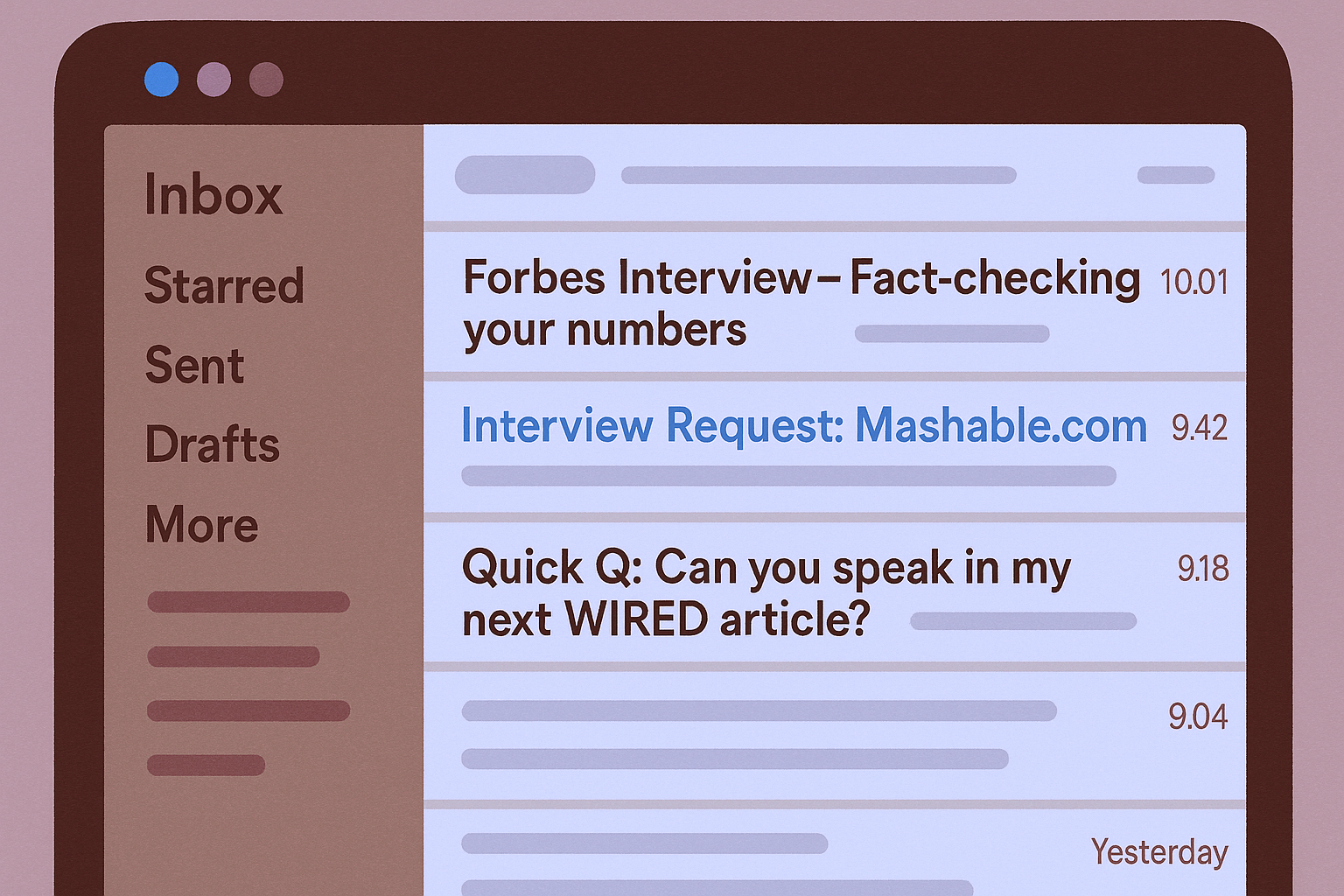
You Already Know PR Is Just an Email
But the real hesitation is that you know an email is the answer—there are just 5,000 ways to write one.
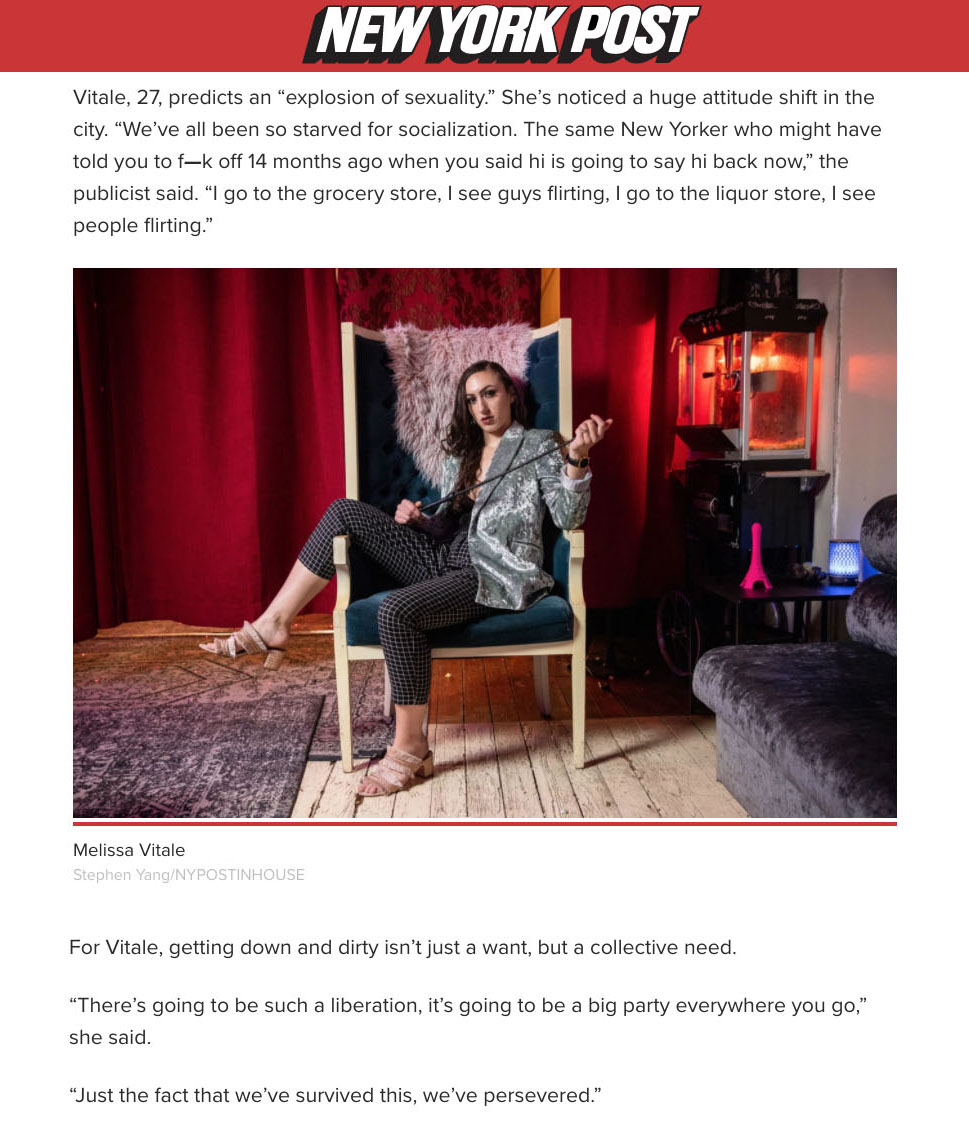
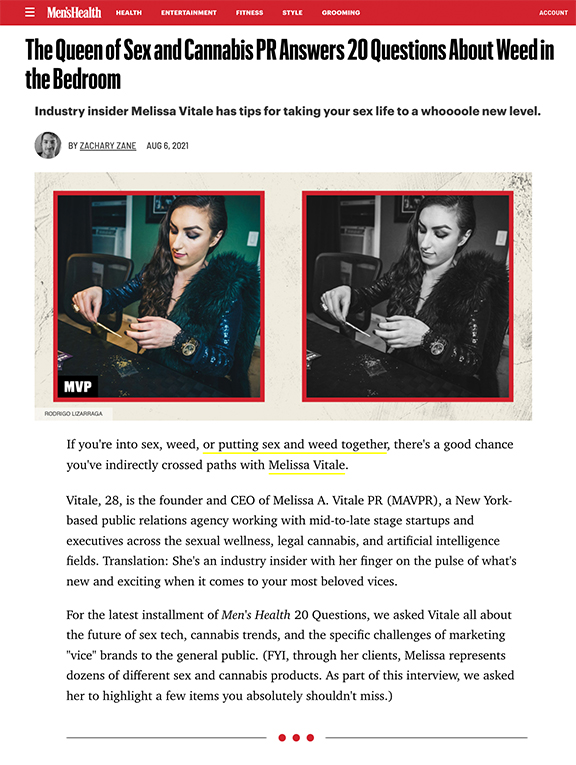
How did I get an escort into The Wall Street Journal? An email.
How did I get a sex club in The New York Times? An email.
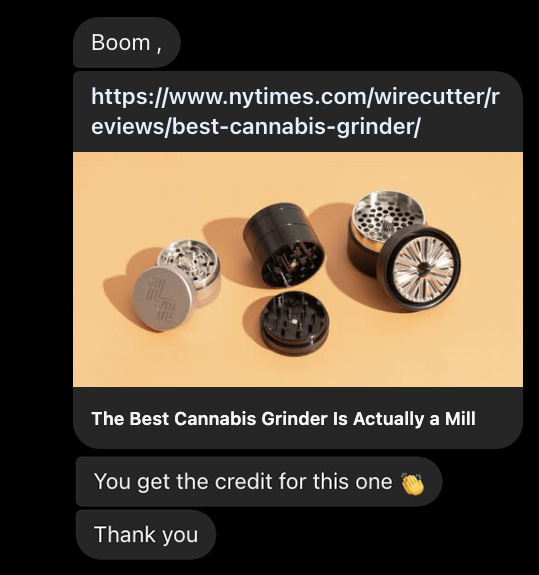
How did I get cannabis brands in Forbes? An email.
How did I get a joint listed in New York Magazine's Strategist that resulted in a $17,500 sale day (on a $20 product)? An email.
You could hire a PR agency for $15,000/month—but they're just going to send an email too. Might as well learn the skill yourself.
That's what the Pitch Playbook offers: A subject library of how-to instructional videos to turn something that has failed you in the past—emailing journalists—into over 75% response rates on average.
Here's the Good News:
Journalists Actually Want to Hear From You
Founders don't need to run a full PR campaign to get the press of a publicist.
Why Journalists Need You Specifically
Journalists can't just make claims without backing them up. They need to source and cite their information. Which means they're always looking for sources—people they can quote to back up their stories.
And that's you. You're a source, whether you think of yourself that way or not.
The media considers you a source because you have insider insight, industry and market knowledge that allows you to predict niche trends, and expertise as a founder that makes you an ideal source for business publications and writers. You don't need a PhD or decades of experience. You just need to know your industry better than the average reader—which you do.
Your Competitive Advantage
Most founders doing their own PR are open to last-minute or quick-turnaround interviews because they can prioritize a call for scaling growth that comes from organic press—SEO, authority, all of it. Whereas a source with 10,000 journalist requests? They'll respond next week, well after the story is sourced, filed and published.
So all you need to do? Write an email that shows a journalist you're that person for them. The one who signals: "I'm who you want to speak to. I'm who you want to source on repeat."
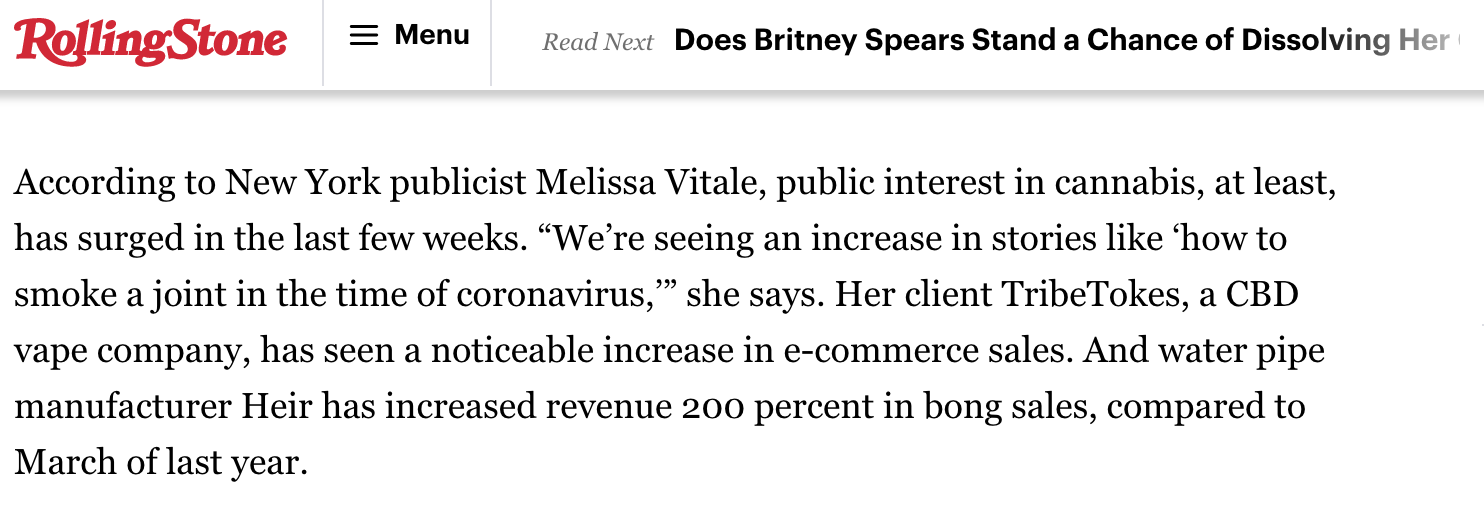
"Melissa, what if I'm not an expert?"
You created a business. Therefore, you're an expert in creating a business. You can explain the hurdles, the successes, the trial and error from a real, lived level.
If you created a business in an industry you've worked in for years, by Malcolm Gladwell's 10,000-hour rule, you're an expert. We're not looking for PhD-level expertise. Just someone who can solidly support a journalist's statement or idea—someone who can explain a concept that's far-off for readers but daily life for you.
Entrepreneurial expertise. Stories. Habits. Success tips. Even playlist recommendations. These are all things founders can comment on, and journalists are writing these stories constantly.
Which means there are journalists right now who need your expertise. Not "might consider writing about you sometime." They need you.
The real scarcity isn't spots in this program.
It's that you can't get back the time you wasted not knowing what to do. You can't get back the opportunities you missed because you didn't know how to speak a journalist's language. And you can't re-make the relationships you blew because you asked too many questions and didn't showcase your value. The scarcity is in the opportunities that are passing you by because you don't feel confident to take action.
"I'll use the templates another day." Meanwhile, journalists want to feature you today!
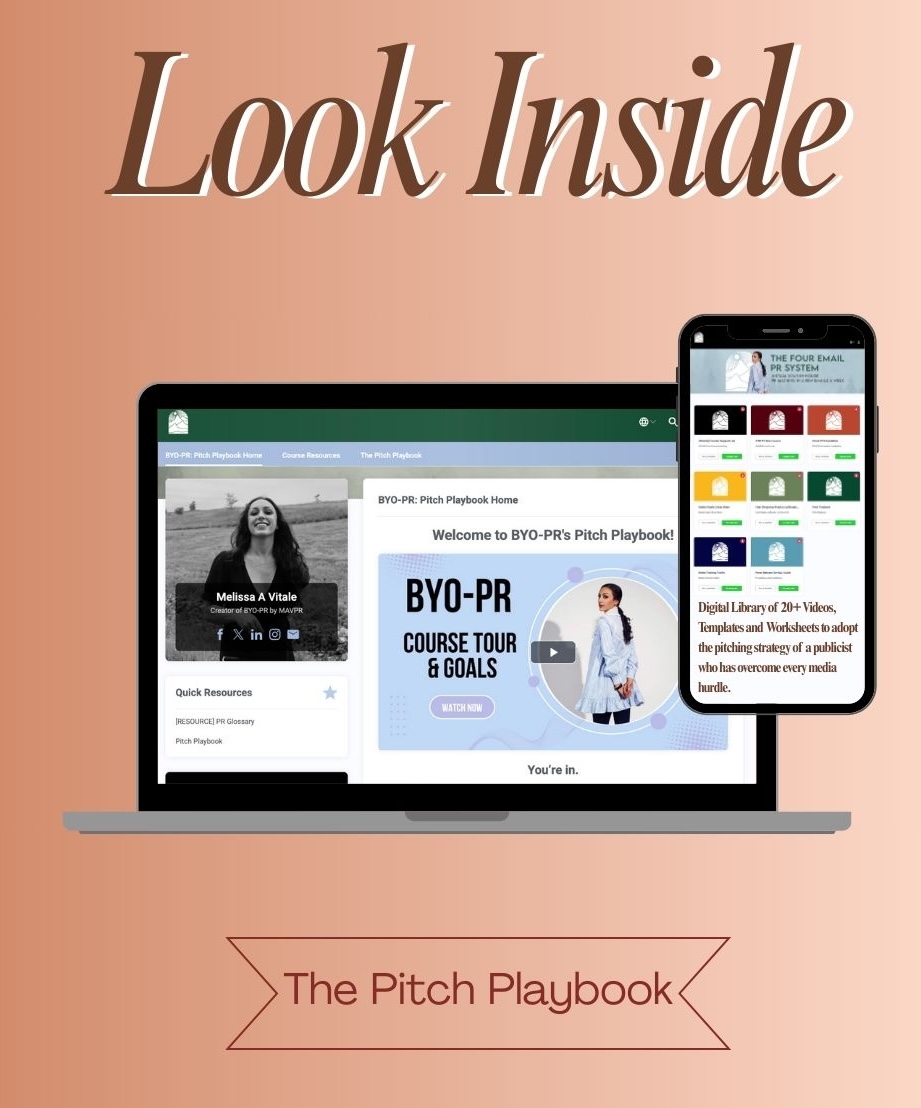
What's Inside The Pitch Playbook
15 modules covering everything from your first pitch to building a sustainable PR system
Modules 1-2: Pitch Goals & Your First Pitch
Stop spray-and-pray pitching. Fill-in-the-blank framework that eliminates writer's block and gets you pitching strategically.
Modules 3-5: Master the 3 Essential Pitch Types
Introduction, Thought Leadership, Product Pitches. Learn exactly when to use each format and how to customize them for maximum journalist interest.
Modules 6-7: Subject Lines & Follow-Up
Stop pitches from dying in the inbox. 10 tested subject line formulas + the exact timing and language for follow-ups that don't annoy.
Modules 8-10: Handle Every Response Like a Pro
"Yes," "More info," "On file"—decoded. Know exactly what to say when journalists respond so you turn every interaction into opportunity.
Modules 11-13: Scale Your Outreach
Sequences, seasonal angles, creative story mining. Reach multiple journalists efficiently while maintaining personalization that gets responses.
Modules 14-15: Build Your PR System
Sustainable weekly schedule that doesn't consume your life. The exact weekly and monthly PR schedule that keeps momentum going with just a few focused hours.
The Key to Sustainable PR:
Build Relationships, Not One-Off Stories

If a journalist knows a source is going to get back to them and have what they need, they won't need to hunt for new sources. You just have to be a reliable source with a journalist who constantly covers your industry. Then you become the go-to expert without doing much besides checking your email.
Most entrepreneurs chase one story at a time. As a result, it's really hard to sustainably garner consistent headlines and media placements as your business grows.
But when you build relationships with journalists? You can have 20+ stories from a single journalist. Make relationships with five journalists? That's 100 stories right there.
So how do you pitch for a relationship and maintain the relationship? Lucky for you, you don't have to guess. I already built a step-by-step video library on the very subject.
What Journalists Say About Me

These are the people reading your emails at The Wall Street Journal, The New York Times, Forbes, and beyond. Here's why my approach stands out.

"PR emails come with such thought and artistry that it basically writes the story for you. I have firsthand seen Melissa Vitale make careers for people and brands. She creates empires for folks and is often the not-so-secret hand at work."

"Melissa's pitches stand out remarkably—far above the rest—which is why I've written about her clients more than anyone else. She's always professional, timely, and makes my job so much easier."

"Melissa's genius is actually quite simple: she's a master at forging relationships. She understands that the key to getting coverage at top-tier brands is to actually know the writers and editors behind them as people and professionals, not just email addresses."

"Melissa is great to work with. She truly understands that PR is a business built on relationships. She once connected me with a source that was no longer a client of hers, just because she wanted to help me out, and wanted her former client to be successful. Talk about a class act!"

"Melissa's relationship-first approach to publicity is refreshing. I'm actually excited to see her name in my inbox because she takes the time to understand the types of stories and sources I'm seeking and tailors her pitches accordingly. I also appreciate how Melissa regularly checks in with her network of journalists to see how she can support their work, regardless of the clients she's promoting."

"I always recommend Melissa as 'the best in the biz' because she brings something rare in the PR world: authenticity. She knows how to engage with journalists in a way that's thoughtful, personable and genuinely FUN."
Start Landing Press Coverage This Week
Journalists are working on stories right now. With the right pitch format and follow-up scripts, you could be interviewed this week and published within days—not months.
💬 Includes journalist response scripts • 🎯 15+ How to Videos to Pitch and Reply with Publicist Confidence
⭐ Lifetime Access • 🔒 Secure SSL Checkout
Founders Who Mastered This Skill

"When I was taken off Instagram at over 95,000 followers, I gawked at the PR rates I was being quoted. The advice from the Pitch Playbook helped me send one email that turned into a story. My Instagram reappeared and my source of income was secured. Worth the $247."
Still Have Questions?
Performance Guaranteed
These are the same SOPs my employees—some without PR degrees—have used to place top-tier headlines. They work when you use them.
If you send 12+ pitches in your first 30 days using my templates and don't get a response, forward me your pitch. I'll review it and give you one of three options:
✓ A pitch rewrite by me personally
✓ A 1:1 PR consultation with me (valued at $750)
✓ Or in rare cases, a refund
Use them and they'll work. Period.
You Have Everything
Except The Confidence
✓ You have the templates publicists charge $15K/month to use
✓ You have the credentials journalists want to quote
✓ You have the expertise reporters need
What you don't have is the confidence to hit send—because you haven't seen how it's actually done.
4 Strategic Emails Per Week = Your PR Machine
Save $120,000++ in agency fees
No spray-and-pray. No media databases. Just surgical pitches to the right journalists using templates that actually get responses. Install the system once, use it forever.
Ready to Pitch like a PR Pro? →Here's What Happens After You Click:
→ Right Now: Templates download immediately to your inbox
→ Tonight: Watch the 15-min quick-start video over dinner
→ This Week: Send your first pitch using the proven templates
→ Within 14 Days: Get your first journalist response
Most founders land their first media inquiry within 2 weeks.
You're just 4 emails away from your first headline.
🎥 Step-by-step video training • ⚡ High-response subject lines included
✓ One-time payment of $247 (vs $10,000/month PR retainer)
✓ Performance Guarantee included • Lifetime access with all updates
🔒 Instant delivery to your inbox

Stop planning your empire.
Start building it—in 4 emails.
What Happens When a Journalist Replies?
Upgrade to the Pitch Playbook to Land Headlines in Forbes, Fortune, New York Times, Wired, and more.
Upgrade to The Pitch Playbook Now →You've got the templates that get responses, upgrade now to stop Guessing with a Step-by-Step How-To Video Library of how to pitch, Follow up without getting marked as spam, and Confidently turn emails into your next Top Tier Interview(s).
Having a Template Doesn't Mean
You Know HOW to Pitch
Pitching is a delicate dance between journalist and source—and it has its own language.
When a journalist says "I'm keeping you on file" or "I'll pitch this at my next meeting" or "Let me talk to my editor about this," these aren't just polite brush-offs. They're standard responses that mean something specific in the media world.
And this is where most founders miss opportunities: each of these responses requires a specific follow-up from you.
If someone says "I'm going to bring this up in my next pitch meeting," there's something you should be doing to make sure they actually do that. There's a specific type of follow-up you can send that dramatically increases the chances that conversation becomes a published story.
But what is that follow-up? What should you send? When should you send it?
That's exactly what you learn inside the Pitch Playbook.
This isn't just another pitch template you copy and paste. This is where you learn the actual skill of pitching—the insider language, the journalist responses, and the exact moves that turn conversations into coverage.
Right now, pitching is deep murky water.
There's a good chance you can touch the bottom and not suffocate, or there's a sea monster ready to pull you down to the depths.
The Scenario Every Founder Knows:
You find the perfect journalist. They just wrote about companies like yours. This is it. This is your moment.
But then you freeze.
Do I introduce myself first? Do I just send a product pitch? Wait—do I send samples? Should I mention the article they wrote? Is that weird?
You stare at your screen. You have four pitch templates open. You have no idea which one to use.
So you guess.
You send something. It feels okay. Maybe? You hit send and immediately regret every word.
A week later, they respond: "Thanks for reaching out. I'm keeping you on file for future stories."
Your heart sinks. That's a no, right? That's journalist-speak for "leave me alone." You delete the thread and move on.
What you don't know: That was a yes. That response had a specific next step—one that would've gotten you into their next roundup. But you didn't know that. So you missed it.
And this happens over and over. You send hundreds of emails. You get a handful of responses that feel like rejections. You have zero headlines to show for it.
You're pitching in the dark. And in PR, when you can't see what you're doing, you're either going to be fine... or a sea monster is going to drag you to the bottom.
But with the Pitch Playbook:
Gone is the hesitance that has cost you headlines.
You read an article. You know exactly who to pitch, how to pitch them, and which template to use.
You're not guessing anymore. You know how to form the story. You know the pacing for follow-ups. And when they respond—any response, yes or no—you know exactly what it means and what to do next.
You're not just copying and pasting templates. You've learned the skill of pitching.
So when you're at a conference and a journalist strikes up a conversation? You already know how to package your expertise into thought leadership that gets them interested.
And when an investor asks what you do? You pitch yourself with the same confidence and clarity that gets you press.
(Suddenly that $247 feels like chump change.)
You're not drowning in murky waters anymore. You know exactly where you're going—and how to get there.
This Isn't a One-Time Service.
It's a Skill That Saves You $120,000++
The Real Math of DIY PR
Most founders DIY their PR for 2-5 years—until investors and board members demand they fund a PR firm of their choosing.
PR Agency Retainer: $5,000–$15,000/month
× 24–60 months of DIY PR =
You could spend on agencies...
Or you could invest $247 in mastering the skill yourself.
This isn't a PR platform. This is a PR solution to learn the skill that replaces a PR agency—a skill you'll use for years, maybe decades, to come.
You Already Know PR Is Just an Email
But the real hesitation is that you know an email is the answer—there are just 5,000 ways to write one.
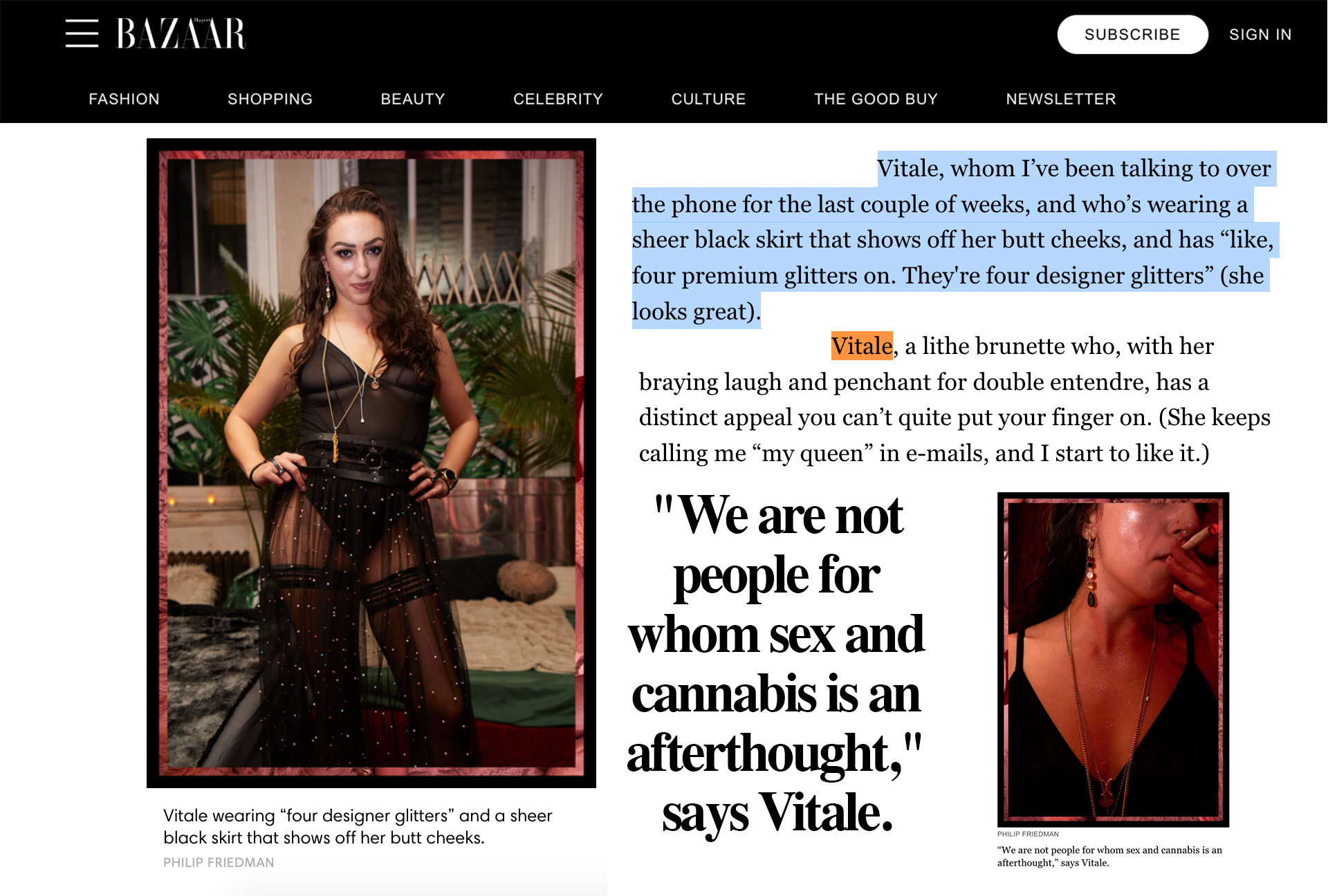
How did I get an escort into The Wall Street Journal? An email.
How did I get a sex club in The New York Times? An email.
How did I get cannabis brands in Forbes? An email.
How did I get a joint listed in New York Magazine's Strategist that resulted in a $17,500 sale day (on a $20 product)? An email.
You could hire a PR agency for $15,000/month—but they're just going to send an email too. Might as well learn the skill yourself.
That's what the Pitch Playbook offers: A subject library of how-to instructional videos to turn something that has failed you in the past—emailing journalists—into over 75% response rates on average.
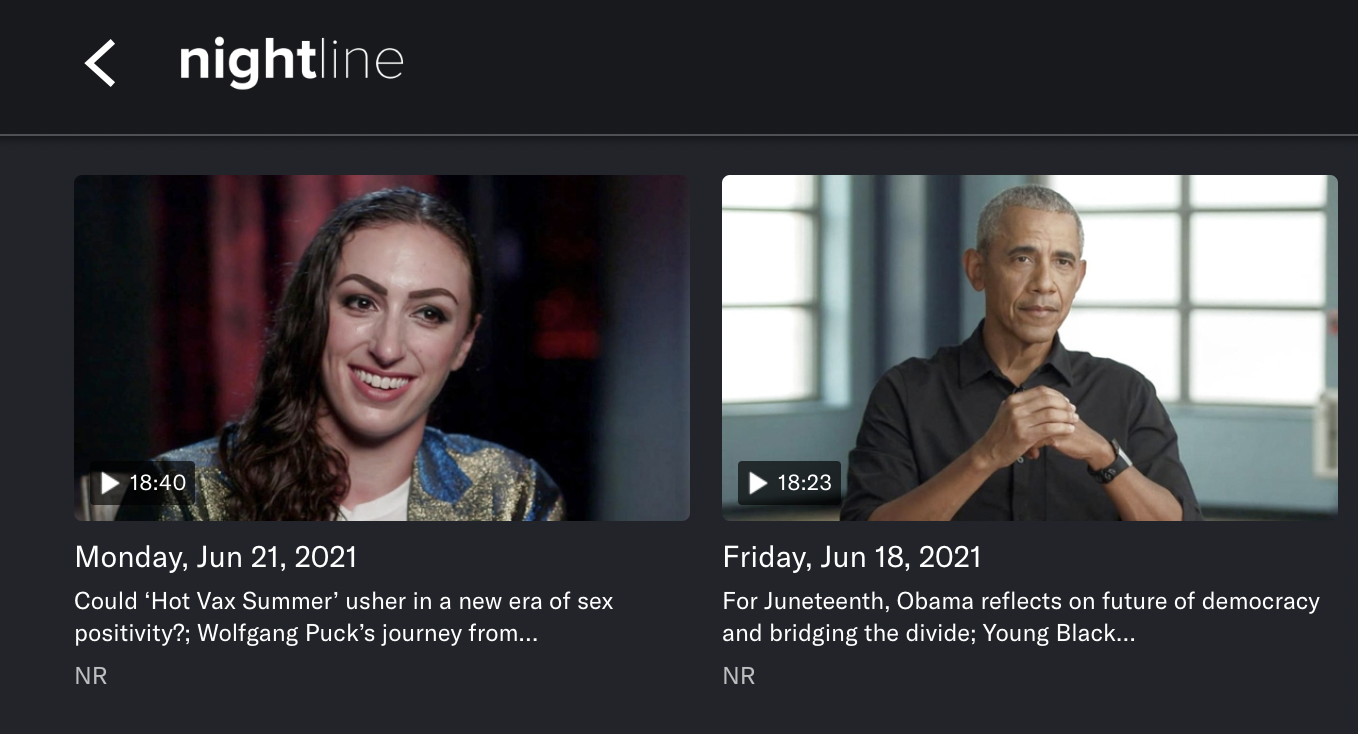
Here's the Good News:
Journalists Actually Want to Hear From You
Founders don't need to run a full PR campaign to get the press of a publicist.
Why Journalists Need You Specifically
Journalists can't just make claims without backing them up. They need to source and cite their information. Which means they're always looking for sources—people they can quote to back up their stories.
And that's you. You're a source, whether you think of yourself that way or not.
The media considers you a source because you have insider insight, industry and market knowledge that allows you to predict niche trends, and expertise as a founder that makes you an ideal source for business publications and writers. You don't need a PhD or decades of experience. You just need to know your industry better than the average reader—which you do.
Your Competitive Advantage
Most founders doing their own PR are open to last-minute or quick-turnaround interviews because they can prioritize a call for scaling growth that comes from organic press—SEO, authority, all of it. Whereas a source with 10,000 journalist requests? They'll respond next week, well after the story is sourced, filed and published.
So all you need to do? Write an email that shows a journalist you're that person for them. The one who signals: "I'm who you want to speak to. I'm who you want to source on repeat."
"Melissa, what if I'm not an expert?"
You created a business. Therefore, you're an expert in creating a business. You can explain the hurdles, the successes, the trial and error from a real, lived level.
If you created a business in an industry you've worked in for years, by Malcolm Gladwell's 10,000-hour rule, you're an expert. We're not looking for PhD-level expertise. Just someone who can solidly support a journalist's statement or idea—someone who can explain a concept that's far-off for readers but daily life for you.
Entrepreneurial expertise. Stories. Habits. Success tips. Even playlist recommendations. These are all things founders can comment on, and journalists are writing these stories constantly.
Which means there are journalists right now who need your expertise. Not "might consider writing about you sometime." They need you.
The real scarcity isn't spots in this program.
It's that you can't get back the time you wasted not knowing what to do. You can't get back the opportunities you missed because you didn't know how to speak a journalist's language. And you can't re-make the relationships you blew because you asked too many questions and didn't showcase your value. The scarcity is in the opportunities that are passing you by because you don't feel confident to take action.
"I'll use the templates another day." Meanwhile, journalists want to feature you today!
What's Inside The Pitch Playbook
15 modules covering everything from your first pitch to building a sustainable PR system
Modules 1-2: Pitch Goals & Your First Pitch
Stop spray-and-pray pitching. Fill-in-the-blank framework that eliminates writer's block and gets you pitching strategically.
Modules 3-5: Master the 3 Essential Pitch Types
Introduction, Thought Leadership, Product Pitches. Learn exactly when to use each format and how to customize them for maximum journalist interest.
Modules 6-7: Subject Lines & Follow-Up
Stop pitches from dying in the inbox. 10 tested subject line formulas + the exact timing and language for follow-ups that don't annoy.
Modules 8-10: Handle Every Response Like a Pro
"Yes," "More info," "On file"—decoded. Know exactly what to say when journalists respond so you turn every interaction into opportunity.
Modules 11-13: Scale Your Outreach
Sequences, seasonal angles, creative story mining. Reach multiple journalists efficiently while maintaining personalization that gets responses.
Modules 14-15: Build Your PR System
Sustainable weekly schedule that doesn't consume your life. The exact weekly and monthly PR schedule that keeps momentum going with just a few focused hours.
The Key to Sustainable PR:
Build Relationships, Not One-Off Stories
If a journalist knows a source is going to get back to them and have what they need, they won't need to hunt for new sources. You just have to be a reliable source with a journalist who constantly covers your industry. Then you become the go-to expert without doing much besides checking your email.
Most entrepreneurs chase one story at a time. As a result, it's really hard to sustainably garner consistent headlines and media placements as your business grows.
But when you build relationships with journalists? You can have 20+ stories from a single journalist. Make relationships with five journalists? That's 100 stories right there.
So how do you pitch for a relationship and maintain the relationship? Lucky for you, you don't have to guess. I already built a step-by-step video library on the very subject.
What Journalists Say About Me
These are the people reading your emails at The Wall Street Journal, The New York Times, Forbes, and beyond. Here's why my approach stands out.
"PR emails come with such thought and artistry that it basically writes the story for you. I have firsthand seen Melissa Vitale make careers for people and brands. She creates empires for folks and is often the not-so-secret hand at work."
"Melissa's pitches stand out remarkably—far above the rest—which is why I've written about her clients more than anyone else. She's always professional, timely, and makes my job so much easier."
"Melissa's genius is actually quite simple: she's a master at forging relationships. She understands that the key to getting coverage at top-tier brands is to actually know the writers and editors behind them as people and professionals, not just email addresses."
"Melissa is great to work with. She truly understands that PR is a business built on relationships. She once connected me with a source that was no longer a client of hers, just because she wanted to help me out, and wanted her former client to be successful. Talk about a class act!"
"Melissa's relationship-first approach to publicity is refreshing. I'm actually excited to see her name in my inbox because she takes the time to understand the types of stories and sources I'm seeking and tailors her pitches accordingly."
"I always recommend Melissa as 'the best in the biz' because she brings something rare in the PR world: authenticity. She knows how to engage with journalists in a way that's thoughtful, personable and genuinely FUN."
Start Landing Press Coverage This Week
Journalists are working on stories right now. With the right pitch format and follow-up scripts, you could be interviewed this week and published within days—not months.
💬 Includes journalist response scripts • 🎯 15+ How to Videos
⭐ Lifetime Access • 🔒 Secure SSL Checkout
Founders Who Mastered This Skill
"When I was taken off Instagram at over 95,000 followers, I gawked at the PR rates I was being quoted. The advice from the Pitch Playbook helped me send one email that turned into a story. My Instagram reappeared and my source of income was secured. Worth the $247."
Still Have Questions?
Performance Guaranteed
These are the same SOPs my employees—some without PR degrees—have used to place top-tier headlines. They work when you use them.
If you send 12+ pitches in your first 30 days using my templates and don't get a response, forward me your pitch. I'll review it and give you one of three options:
✓ A pitch rewrite by me personally
✓ A 1:1 PR consultation with me (valued at $750)
✓ Or in rare cases, a refund
Use them and they'll work. Period.
You Have Everything
Except The Confidence
✓ You have the templates publicists charge $15K/month to use
✓ You have the credentials journalists want to quote
✓ You have the expertise reporters need
What you don't have is the confidence to hit send—because you haven't seen how it's actually done.
4 Strategic Emails Per Week = Your PR Machine
Save $120,000++ in agency fees
No spray-and-pray. No media databases. Just surgical pitches to the right journalists using templates that actually get responses. Install the system once, use it forever.
Ready to Pitch like a PR Pro? →Here's What Happens After You Click:
→ Right Now: Templates download immediately to your inbox
→ Tonight: Watch the 15-min quick-start video over dinner
→ This Week: Send your first pitch using the proven templates
→ Within 14 Days: Get your first journalist response
Most founders land their first media inquiry within 2 weeks.
You're just 4 emails away from your first headline.
🎥 Step-by-step video training • ⚡ High-response subject lines included
✓ One-time payment of $247 (vs $10,000/month PR retainer)
✓ Performance Guarantee included • Lifetime access with all updates
🔒 Instant delivery to your inbox
This site is not a part of the YouTube, Google or Facebook website; Google Inc or Facebook Inc. Additionally, This site is NOT endorsed by YouTube, Google or Facebook in any way. FACEBOOK is a trademark of FACEBOOK, Inc. YOUTUBE is a trademark of GOOGLE Inc.
DISCLAIMER: The results discussed on this page and in our videos are our personal results and, in some cases, those of previous or existing clients. These results are not typical, and we are not implying you will duplicate them. Most people who consume educational content do not take consistent action and therefore see little to no results. We share these examples for illustrative purposes only to show what’s possible. Your results will vary and depend on many factors including, but not limited to, your background, experience, ability to implement, and work ethic. We make no guarantees regarding financial, media, or business outcomes.
© Copyrights by MAVPR. All Rights Reserved.